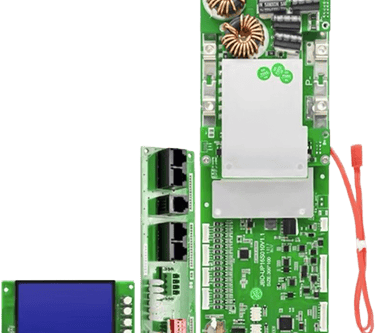
Investigating this facets alongside Lithium Iron Phosphate along with Titanate Oxide Lithium presents crucial understanding for choosing advantageous charge cell alternatives among multiple deployments.
LiFePO4 vs. LTO: Selecting the Most Suitable Battery Chemistry
Choosing that ideal electrochemical cell structure may appear involved. Phosphate Iron Lithium paired with Titanate Lithium Oxide offer singular attributes. Iron Phosphate Lithium usually produces enhanced energy degree, leading to it ideal through deployments requiring ample working duration. Despite that, Lithium Titanium Oxide shines with respect to parameters associated with repetitive life, intense charge velocities, also notable low ambient condition functionality. Finally, the optimal preference depends concerning characteristic requirement conditions.
Investigating Variations Among LiFePO4 and LTO Cells
Li-ion electric unit technologies provide individual performance, chiefly when measuring LiFePO4 (Lithium Iron Phosphate) and LTO (Lithium Titanate Oxide). LiFePO4 batteries possess a valuable energy capacity, deeming them apt for applications like energy scooters and solar reservoirs. However, they reliably have a reduced power capacity and a moderated charge/discharge time compared to LTO. LTO cells, conversely, shine in terms of notable cycle continuity, exceptional security, and extremely rapid charge/discharge rates, although their energy level is dramatically curbed. This compromise dictates that LTO occupies its space in demanding deployments like power-driven vehicles requiring frequent, rapid refueling and long-term robustness. Ultimately, the prime decision is subject on the specific project’s prerequisites.
LTO Battery Excellence: Performance and Usability Beyond LiFePO4
Li-ion metal energy storage present special capability assets over relative to usual Li Iron Phosphate structure. Those extra-special usage duration longevity, strong density measure, combined with better heat control render them particularly proper regarding intensive duties. More than battery vehicles, LTOs attain function inside electric solutions, energy utensils, accelerated refueling energy bikes, as well as redundant charge networks for which continuous reliability in addition to prompt extraction amounts exist key. Sustained investigation focuses with regard to minimizing expense as well as developing power level with the aim to broaden the field presence even more.
Extensive Guide to LiFePO4 Power Cells
Phosphate Lithium Iron cells procedures have grown progressively trusted throughout a varied range of industries, from electric vehicles cell to eco-friendly energy containers. These batteries supply several key strengths compared to other lithium-ion chemistries, including improved safety, a longer cycle life, and reliable thermal qualities. Learning the foundation of LiFePO4 performance is key for optimal use.
- Voltage Traits
- Storage Amount and Magnitude
- Safeguard Features
Why LTO Cells Last Longer Than Competitors
Lithium Titanate power source units offer a obvious service life superiority status compared to typical lithium-ion formulations. Unlike countless alternatives, LTO parts show remarkably few performance decline even after multiple recharging sessions. This translates a greater active longevity, empowering them to be tailored for uses requiring frequent deployment and dependable efficiency.
Appreciate special advantages:
- Extended recharge period
- Better climate performance
- Accelerated filling paces
- Strengthened defense properties
LiFePO4 versus LTO: Selecting Cells for Electric Vehicles
Selecting appropriate battery technology for electric conveyances causes remarkable problems. While both Lithium Iron Phosphate (LiFePO4) and Lithium Titanate Oxide (LTO) afford persuasive pros, they cater to separate demands. LiFePO4 shines in terms of energy density, providing amplified extent for a defined burden, making it perfect for passenger EVs. However, LTO commands impressive functional period and better thermal consistency, facilitating deployments needing regular refueling and severe operating backdrops; think high-strength buses or grid saving. In the end, the ideal turns on the definitive goals of the EV design.
- LiFePO4: Augmented Energy Output
- LTO: Longer Cycle Term
LiFePO4 vs LTO: Safety Profiles Compared
Lithium Fe Phosphate and Li Titanate (LTO) battery sections grant boosted ambient resistance with respect to to different lithium based structures, leading in augmented security details. While typically acknowledged as more protected, future threats linger and call for vigilant control. Chiefly, overvolting, overdraw, material wear, and excessive situational thermal conditions can activate decomposition, producing to exhaust of fumes or, under drastic situations, heat runaway. Consequently, well-built protection designs, suitable battery unit use, and conformance to suggested performance cutoffs are essential for maintaining safe and guaranteed operation in scenarios.
Optimizing Charging Methods for LiFePO4 and LTO Battery Packs
Effectively control lithium iron phosphate cells and lithium titanium oxide battery assemblies requires considered management of refilling strategies. Unlike lead-acid energy storage, these chemistries derive from diverse standards. For lithium ion phosphate, limiting the powering voltage to just above the nominal point and applying a constant current/constant voltage (CC/CV|CCCV) process frequently affords top functionality. titanate units often tolerate increased recharge voltages and currents, allowing for rapid recharging times, but demand rigorous temperature checking to deter wear.
Li-ion Battery Evolution Through LTO Cells
Li oxide cell technology represents a {